|
U.S. Migration of Gambling
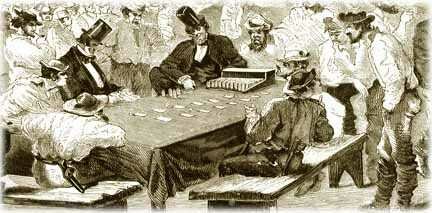 Popular in the original Colonies, gambling moved west as the population moved. Popular in the original Colonies, gambling moved west as the population moved.
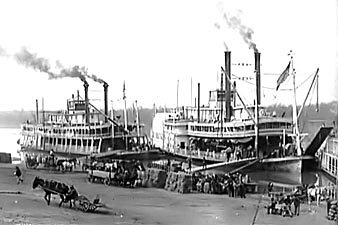
As gambling fell out of favor vigilante groups formed and pushed the Professional
Gamblers onto the Riverboats to ply their trade from the 1840's to 1860's. Many also
went to California during the Gold Rush period of 1848 to 1855. New Orleans
became the capital for Gamblers prior to the Civil War.
With the outbreak of the Civil War and the westward expansion of trains, riverboats
lost favor with passengers and thus the gamblers. Though the Civil War is partly to
blame for the demise in riverboat gambling it is also credited with the growth of
gambling as boys who left their homes to join the cause became exposed to gambling
as a means of a diversion from the War.
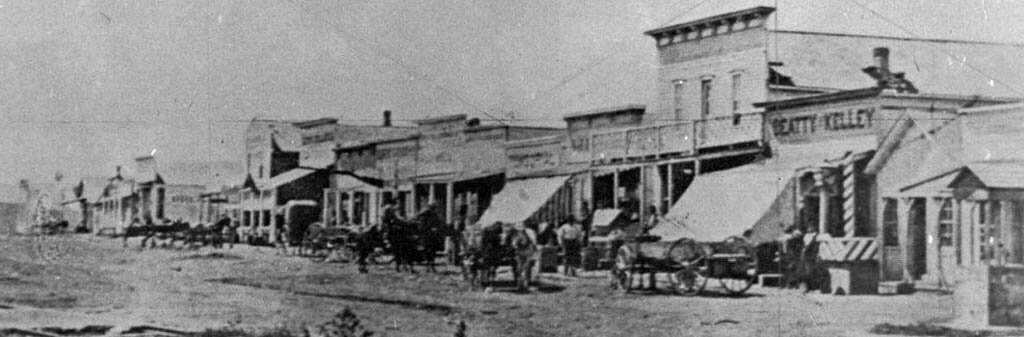
 As the population again moved westward after the war, gamblers moved right along with it. This As the population again moved westward after the war, gamblers moved right along with it. This
time, the gamblers, found themselves headed for the mining camps and the cow towns.
Poker and Blackjack were relatively obscure games until the late 1870's. Faro was "King" of all
the games followed by Three-card Brag, Monte, and dice games such as High/Low, Chuck-A-Luck,
and Grand Hazard.
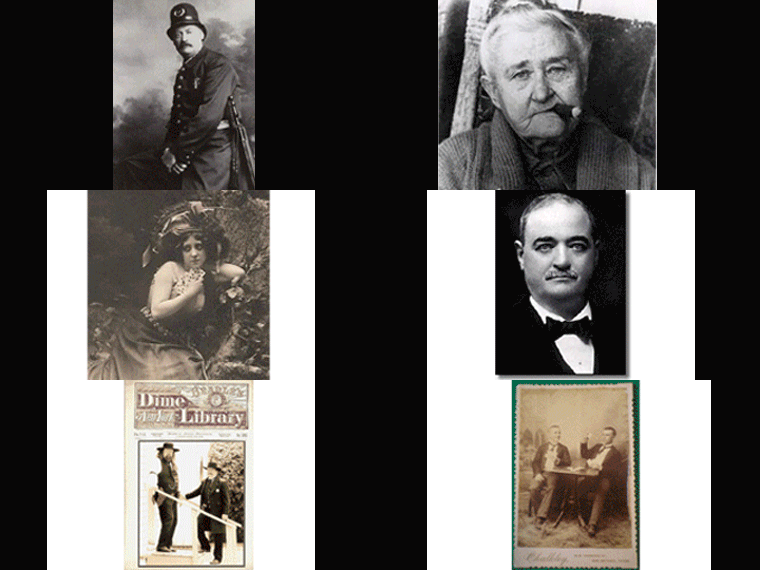
The gambler, from about 1850 to 1880, was among the Aristocrats of Western Society. In the words
of Bat Masterson, " Gambling was a respected profession, almost equal in rank to Medicine and a
lot higher than Dentistry and Undertaking".
Many Western Gamblers came from the riverboats, New Orleans, Natchez and Chicago. In many
mining towns bets ranged from two-bits (25 cents) to $100.00.
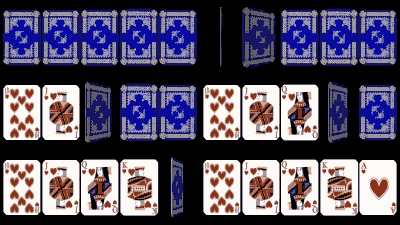
A regular industry existed in support of the dishonest gambler. The firm of E. M. Grandine, 41 Liberty Street, New York, N.Y. marketed so
called Advantage (marked) playing cards. Dr. Cross and Company manufactured decks in New Orleans beginning in 1837. By 1850 half a
dozen firms manufactured advantage cards, well known backs included Calico, Endless Vine, Stars, Marble, Perpetum Mobile and Mille
Fleurs. For a time no experienced player would engage in a game where decks with complicated, busy back designs, were used.

|